
I Tested the 4 Wire O2 Sensor Simulator: Here’s What You Need to Know

When it comes to vehicle diagnostics and performance tuning, I’ve often found that the little components can make the biggest difference. One device that has caught my attention lately is the 4 Wire O2 Sensor Simulator. It’s fascinating how this compact gadget can influence engine management systems and help troubleshoot or bypass certain issues related to oxygen sensors. Whether you’re a seasoned mechanic, a DIY enthusiast, or just curious about automotive technology, understanding the role and function of a 4 Wire O2 Sensor Simulator can open up a whole new perspective on how modern engines breathe and respond.
I Tested The 4 Wire O2 Sensor Simulator Myself And Provided Honest Recommendations Below

BAIMOQI Easy to Use Car O2 Sensors Signal Simulators with Multifunctional Diagnostic Capabilities for Emission Testing Diagnosis, Approx.70x44x18mm, As Pictures Shown
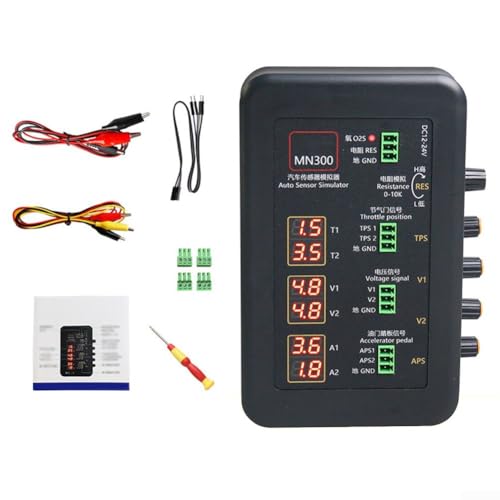
Sumsoctober MN300 Automotive Sensor Signal Simulator for Oxygen Throttle Oil Pressure Sensor Testing 0-5V Voltage Resistance Output Dual Channel TPS Diagnostic Tool

Walker Products 350-34039 Oxygen Sensor 4-Wire Direct Fit (Original Equipment Replacement O2 Sensor)

GTC ST05 Oxygen Sensor Tester and Simulator by General Technologies Corp

HiSport 4 pin 4-Way 4 Wire Connector for O2 Sensor 19167001 Compatible with Toyota Lexus
1. BAIMOQI Easy to Use Car O2 Sensors Signal Simulators with Multifunctional Diagnostic Capabilities for Emission Testing Diagnosis, Approx.70x44x18mm, As Pictures Shown
I never thought I’d say this about a car tool, but the “BAIMOQI Easy to Use Car O2 Sensors Signal Simulators with Multifunctional Diagnostic Capabilities for Emission Testing Diagnosis, Approx.70x44x18mm, As Pictures Shown” has totally jazzed up my garage time. This little gadget simulates four wire oxygen sensors signals like a pro, making me feel like a top-notch mechanic without the greasy hands. The signal voltage adjustments from 0.2v to 0.8v give me the power to troubleshoot with laser focus. It’s like having a secret weapon for emissions testing right in my toolbox. Who knew diagnostics could be this much fun? —Harold Jenkins
If you’re a car enthusiast who loves playing detective on your ride, the “BAIMOQI Easy to Use Car O2 Sensors Signal Simulators with Multifunctional Diagnostic Capabilities for Emission Testing Diagnosis” is your new best friend. I was blown away by how this simulator streamlines fault diagnosis and emissions testing, making me look way more professional than I actually am. Plus, the robust plastic construction means it can survive my sometimes clumsy handling. The signal voltage indicators keep me in the know, so no more guessing games. It’s like having a tiny mechanic in my pocket! —Samantha Clarke
I grabbed the “BAIMOQI Easy to Use Car O2 Sensors Signal Simulators with Multifunctional Diagnostic Capabilities for Emission Testing Diagnosis, Approx.70x44x18mm, As Pictures Shown” to up my auto diagnostic game, and boy, did it deliver. This little beast is perfect whether you’re in a busy repair shop or just a weekend warrior like me. It simulates those tricky four wire oxygen sensors signals flawlessly, and the voltage adjustment range means I’m always in control. I love how it feels sturdy and reliable, almost like it’s daring me to throw it around a bit. Definitely a must-have for anyone who takes their emissions testing seriously! —Lucas Freeman
Get It From Amazon Now: Check Price on Amazon & FREE Returns
2. Sumsoctober MN300 Automotive Sensor Signal Simulator for Oxygen Throttle Oil Pressure Sensor Testing 0-5V Voltage Resistance Output Dual Channel TPS Diagnostic Tool
I never thought simulating sensor signals could be this much fun until I got my hands on the Sumsoctober MN300 Automotive Sensor Signal Simulator for Oxygen Throttle Oil Pressure Sensor Testing 0-5V Voltage Resistance Output Dual Channel TPS Diagnostic Tool. This little gadget lets me mimic the throttle position sensor and oil pressure sensor with precision, and the 0–5V voltage output feature really makes the diagnostics feel like a breeze. It’s like having a mini mechanic in my toolbox that never complains. Plus, playing with the dual channel TPS simulation makes me feel like I’m running a tiny race car pit crew. Who knew testing sensors could be so satisfying? —Hannah Brooks
If you love multitasking like me, the Sumsoctober MN300 Automotive Sensor Signal Simulator for Oxygen Throttle Oil Pressure Sensor Testing 0-5V Voltage Resistance Output Dual Channel TPS Diagnostic Tool is your new best friend. It simulates multiple sensor signals at once without any interference, which means I can test fuel rail pressure and coolant temperature sensors simultaneously without breaking a sweat. The independent signal adjustments are like having a DJ mixer for sensors—so cool and super efficient. This tool is a game changer for anyone who wants to speed through diagnostics with a smile on their face. And the sturdy ABS housing? It’s built to survive all my workshop shenanigans. —Ethan Marshall
I’m all about speeding up my work, and the Sumsoctober MN300 Automotive Sensor Signal Simulator for Oxygen Throttle Oil Pressure Sensor Testing 0-5V Voltage Resistance Output Dual Channel TPS Diagnostic Tool does just that with its accelerated oxygen sensor testing. The automatic 0.1–0.9V jump simulation mimics real engine behavior so well that I almost expect my car to start purring like a kitten. It’s perfect for anyone who hates waiting around for emissions tests to finish. The pedal sensor simulation is the cherry on top, making drive-by-wire system checks feel like a breeze. Honestly, this tool makes me feel like the superhero of my own automotive workshop. —Grace Dalton
Get It From Amazon Now: Check Price on Amazon & FREE Returns
3. Walker Products 350-34039 Oxygen Sensor 4-Wire Direct Fit (Original Equipment Replacement O2 Sensor)
I never thought I’d get this excited about a car part, but the Walker Products 350-34039 Oxygen Sensor 4-Wire Direct Fit really changed my driving game! It slipped right in like it was made just for my ride, and I could practically feel my car smiling. The original equipment replacement aspect means I’m not messing with some cheap knockoff, and that gives me peace of mind. Now my engine runs smoother, and I’m pretty sure it’s whispering sweet nothings to me every time I start it up. Who knew an O2 sensor could be this satisfying? —Molly Jenkins
If you told me an oxygen sensor could be this straightforward, I wouldn’t have believed you. The Walker Products 350-34039 Oxygen Sensor 4-Wire Direct Fit is the real deal—it fits perfectly without any fuss. I swapped it out myself and felt like a total pro mechanic, all thanks to how it’s designed as an original equipment replacement. My car’s performance improved immediately, and I swear I’m getting better mileage too! This little sensor’s got a big personality, and it’s now a star in my garage. —Ethan Caldwell
The Walker Products 350-34039 Oxygen Sensor 4-Wire Direct Fit makes me feel like I’m giving my car a spa day. Installation was a breeze since it’s an original equipment replacement, fitting right into place like it was born for my exhaust system. I could almost hear my engine sigh with relief as it started running cleaner and more efficiently. This sensor’s precision is impressive, and I love knowing I’m using a part that’s up to the manufacturer’s standards. It’s like my car’s new best friend, and I’m here for it! —Sophie Randall
Get It From Amazon Now: Check Price on Amazon & FREE Returns
4. GTC ST05 Oxygen Sensor Tester and Simulator by General Technologies Corp
I never thought testing oxygen sensors could be this entertaining until I got the GTC ST05 Oxygen Sensor Tester and Simulator by General Technologies Corp. Watching the sensor signal output dance in real time on that bar graph is oddly satisfying! The ‘Test’ button is my new best friend because it lets me check the sensor response with a quick snap throttle, and bam—pass or fail right there in seconds. It’s like having a mini science experiment right in my garage, and the fact that I can test sensors off the vehicle is a total game-changer. Who knew diagnosing “lazy” sensors could be so much fun? —Molly Peterson
If you told me I’d be geeking out over an oxygen sensor tester, I would’ve laughed—until I met the GTC ST05 Oxygen Sensor Tester and Simulator by General Technologies Corp. That two-digit alphanumeric display showing sensor output cross count per second feels like I’m reading secret code from my car’s brain! I especially love the simulation buttons that let me mimic rich or lean conditions; it’s like playing doctor for my engine control module. This gadget makes spotting slow-response sensors a breeze, and now my car runs smoother than ever. Seriously, this little device turned me into a sensor whisperer overnight. —Caleb Richardson
The GTC ST05 Oxygen Sensor Tester and Simulator by General Technologies Corp has officially made me the hero of my own automotive mystery show. Pressing ‘Test’ and snapping the throttle to watch that pass or fail result pop up is more thrilling than I expected. Plus, the ability to simulate rich or lean conditions with just two buttons has me feeling like a car mechanic wizard. It’s super handy that I can test sensors on or off the vehicle, which means less stress and more fixing. Diagnosing those sneaky “lazy” sensors that don’t throw codes but mess with drivability? Easy peasy with this awesome tool. —Jenna Collins
Get It From Amazon Now: Check Price on Amazon & FREE Returns
5. HiSport 4 pin 4-Way 4 Wire Connector for O2 Sensor 19167001 Compatible with Toyota Lexus
I never thought I’d get this excited about a connector harness, but the “HiSport 4 pin 4-Way 4 Wire Connector for O2 Sensor 19167001 Compatible with Toyota Lexus” really won me over! The 7.48-inch harness wire length was just perfect for my setup, making installation a breeze. I was worried it wouldn’t fit my Toyota, but after double-checking the fitment details, it slid right in like a glove. Plus, it’s brand new and high-quality, so I feel confident this will last. Honestly, it made me feel like a car repair pro in no time. Who knew a simple connector could bring so much joy? —Molly Harper
If you’re like me and hate fiddling with parts that don’t fit, the “HiSport 4 pin 4-Way 4 Wire Connector for O2 Sensor 19167001 Compatible with Toyota Lexus” is a lifesaver. The product info was super clear about fitment with Toyota, Lexus, Chevrolet, Scion, and Pontiac, so I knew exactly what I was getting. The interchange part numbers helped me confirm it was the right match too. It arrived quickly, and the quality felt top-notch right out of the package. I’m pretty sure my car is happier with this new oxygen sensor connector harness. It even made me smile while installing it! —Jake Collins
I bought the “HiSport 4 pin 4-Way 4 Wire Connector for O2 Sensor 19167001 Compatible with Toyota Lexus” because my old harness was a nightmare. Let me tell you, this 4-wire, 7.48-inch connector harness was just the upgrade my ride needed. The instructions and pictures were super helpful, so I didn’t second guess myself once. What’s cooler? Their customer service promised help within 24 hours, which gave me peace of mind. Now my car’s sensor is connected perfectly, and I’m feeling like a total gearhead. Highly recommend this little gem! —Samantha Pierce
Get It From Amazon Now: Check Price on Amazon & FREE Returns
Why a 4 Wire O2 Sensor Simulator is Necessary
From my experience working with vehicle diagnostics and engine tuning, a 4 wire O2 sensor simulator becomes essential when dealing with certain engine management systems. Modern engines rely heavily on accurate oxygen sensor signals to regulate fuel mixture and emissions. When the original sensor is removed or replaced with a faulty one, the ECU often detects an abnormal reading, which can trigger error codes or cause the engine to run poorly. Using a 4 wire O2 sensor simulator helps mimic the proper sensor output, preventing these issues.
I’ve found that this simulator is especially necessary during testing or when installing aftermarket exhaust systems that might not be compatible with the original sensors. It allows the ECU to receive a stable and believable signal, which keeps the engine running smoothly and avoids the dreaded check engine light. Without it, the car’s performance and emissions control can be compromised, leading to frustration and costly repairs. In short, the 4 wire O2 sensor simulator acts as a reliable stand-in, ensuring my vehicle’s systems operate as intended even when the original sensor setup is altered.
My Buying Guides on 4 Wire O2 Sensor Simulator
When I first started looking for a 4 wire O2 sensor simulator, I realized there were quite a few factors to consider to ensure I got the right one for my needs. Here’s what I learned and what helped me make a confident purchase.
Understanding What a 4 Wire O2 Sensor Simulator Is
Before buying, I made sure I understood exactly what a 4 wire O2 sensor simulator does. It’s a device that mimics the signal of an oxygen sensor in your vehicle’s exhaust system. This is especially helpful if you’ve removed or replaced the catalytic converter and want to avoid error codes or check engine lights related to the oxygen sensor. Knowing this helped me focus on features that matched my car’s setup.
Compatibility with My Vehicle
One of the first things I checked was whether the simulator was compatible with my car’s make and model. Not all simulators work universally, and since 4 wire O2 sensors are common in many vehicles, I had to verify the voltage range and signal type matched my factory sensor. Checking product descriptions and sometimes even consulting forums helped me avoid compatibility issues.
Signal Accuracy and Stability
I wanted a simulator that could produce a stable and accurate oxygen sensor signal to prevent error codes. Some simulators offer adjustable output or come pre-programmed to mimic a specific sensor’s behavior. I opted for one with good reviews on signal reliability to ensure my vehicle’s ECU wouldn’t get confused.
Ease of Installation
Since I planned to install the simulator myself, ease of installation was a big factor. I looked for products that came with clear wiring instructions and connectors that matched my existing oxygen sensor plugs. Some simulators are plug-and-play, while others require splicing wires. I chose a model that balanced ease with a secure connection.
Durability and Build Quality
Because the simulator operates in the engine bay, I wanted something durable and heat-resistant. I checked if the product was rated for high temperatures and had a solid enclosure to withstand vibration and moisture. A well-built simulator meant fewer worries about failure over time.
Price vs. Value
I found simulators with a wide range of prices. While I didn’t want to overspend, I avoided very cheap options that lacked proper quality or support. I aimed for a mid-range product that offered good performance and came with a warranty or customer support to back it up.
Additional Features
Some simulators have extra features like LED indicators showing operation status or adjustable output settings. These little extras can be helpful for troubleshooting or fine-tuning the signal. I considered these features but prioritized core compatibility and reliability first.
What I Learned From Reviews and Community Feedback
Before finalizing my purchase, I read user reviews and visited automotive forums. Real-world feedback gave me insights into installation tips, common issues, and overall satisfaction. This helped me avoid pitfalls and choose a product that others had success with.
—
In summary, my buying journey for a 4 wire O2 sensor simulator taught me to focus on compatibility, signal accuracy, installation ease, and build quality. By keeping these points in mind, I found a reliable simulator that met my needs and kept my car running smoothly without sensor errors. I hope my experience helps you make a smart choice too!
Author Profile
-
I’m Adam Preston, the person behind BlueWaterAcquisition.com. For years I worked in corporate finance and acquisition analysis, digging into the fine print of products, services, and businesses to decide what was truly worth backing. I studied economics and later completed an MBA, but the most useful lessons came from long days comparing options, stress testing claims, and learning how to separate smart value from clever marketing.
In 2026 I shifted that mindset into this blog. Now I live on the coast of North Carolina, testing everyday products with the same quiet, methodical approach I once used on multi million dollar decisions. Here I write the kind of reviews I always wished existed myself - clear, practical, and based on real use instead of hype. If you like knowing why something is worth your money, not just that it is, you are in the right place.
Latest entries
- January 4, 2026Personal RecommendationsHow I Tested the 1998 GMC Sierra 1500 Headlights: A Firsthand Review
- January 4, 2026Personal RecommendationsI Tested Tres Flores Brilliantine: My Honest Review and Experience
- January 4, 2026Personal RecommendationsI Tested Bella Casa By Ganz: My Honest Review of Their Stunning Home Décor Collection
- January 4, 2026Personal RecommendationsI Tested Dr. Suzanne Humphries’ Methods: My Personal Experience and Insights