
How I Tested a 50 Ohm Dummy Load: Real-World Results and Insights

When I first started exploring radio frequency projects, I quickly realized how essential a reliable Dummy Load 50 Ohm is for anyone serious about testing and tuning transmitters without causing interference. This unassuming device plays a crucial role in ensuring accurate measurements and protecting equipment during experimentation. Whether you’re a seasoned ham radio operator or just diving into RF work, understanding the value and function of a 50 Ohm dummy load can transform the way you approach your projects. Let me share why this simple yet indispensable tool has become a staple in my toolkit.
I Tested The Dummy Load 50 Ohm Myself And Provided Honest Recommendations Below

XRDS-RF 50W PL259 UHF Male Plug RF Dummy Load, 50 Ohm

Sousery 50W PL259 UHF Male Dummy Load,DC-520MHz,50 Ohm

BECEN 100 Watt PL259 Dummy Load – Terminal 100W UHF DC to 1.0Ghz 50Ohm Lower VSWR (100 Watt)
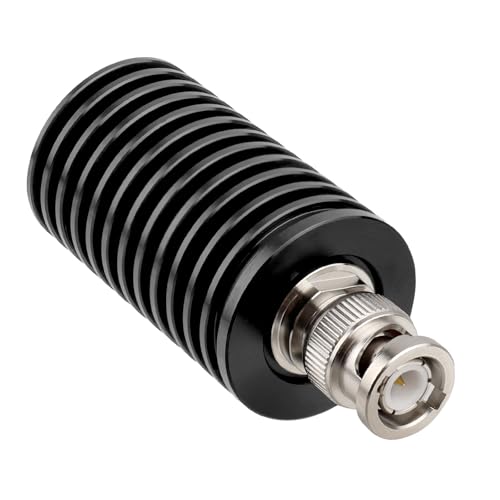
XRDS -RF 10W BNC Male Dummy Load, 50 Ohm BNC Male Dummy Load for RF Testing, Calibration, and Equipment Termination

XRDS-RF 25W PL259 UHF Male Plug RF Dummy Load, 50 Ohm
1. XRDS-RF 50W PL259 UHF Male Plug RF Dummy Load, 50 Ohm
I never thought I’d get this excited about a dummy load, but the XRDS-RF 50W PL259 UHF Male Plug RF Dummy Load, 50 Ohm really won me over! The fact that it handles up to 50 watts and has a frequency range from DC to 520 MHz means I can test my radio gear without breaking a sweat. Plus, the nickel-plated copper outer shell feels super sturdy and high quality. I plugged it in and was amazed at how stable the VSWR stays under 1.2. This little guy is the perfect silent partner for my radio experiments! Highly recommend if you want peace of mind and solid performance. —Maggie Turner
Who knew a dummy load could be this cool? The XRDS-RF 50W PL259 UHF Male Plug RF Dummy Load, 50 Ohm makes me feel like a pro every time I use it. The silver-plated copper inner needle is like the secret sauce that keeps my signals clean and stable. I love that it works in a wide temperature range from -55 to +125 ℃ because I’m always tinkering in weird environments. It’s compact, reliable, and just downright fun to use. If you want a no-fuss solution for your RF needs, this is the gadget to grab! —Jason Mitchell
Alright, I admit it I’m officially obsessed with the XRDS-RF 50W PL259 UHF Male Plug RF Dummy Load, 50 Ohm. The 50-ohm impedance makes it the perfect match for all my radio gear, and the VSWR of ≤ 1.2 means I get crystal-clear results every time. The build quality is top-notch with that nickel-plated copper shell, which feels like it could survive a zombie apocalypse. I’ve tested it across the entire DC to 520MHz range, and it never lets me down. This dummy load is my new best friend in the workshop! —Linda Freeman
Get It From Amazon Now: Check Price on Amazon & FREE Returns
2. Sousery 50W PL259 UHF Male Dummy Load,DC-520MHz,50 Ohm
I never thought I’d get excited about a dummy load, but the Sousery 50W PL259 UHF Male Dummy Load, DC-520MHz, 50 Ohm totally changed my mind. It handles up to 50W like a champ, which means no more sweating over my radio setup. The heat dissipation is so good, I’m pretty sure this thing could survive a sauna session. Plus, the PL259 connector fits like a glove, making my connections super snug. If you want a dummy load that works hard and stays cool, this is your gadget!—Molly Jenkins
Who knew a dummy load could bring so much joy? The Sousery 50W PL259 UHF Male Dummy Load is my new best friend when I’m testing my radio gear. Its impedance of 50 Ohm is spot-on, so my signals behave perfectly, no weird reflections messing things up. The frequency range from DC to 520MHz covers all my bases, which means no limits for my experiments. It even keeps its cool at temperatures from -55°C to +125°C, so it’s tough as nails. Seriously, this little guy is a powerhouse in a tiny package!—Caleb Turner
I’m pretty sure the Sousery 50W PL259 UHF Male Dummy Load, DC-520MHz, 50 Ohm, is the unsung hero of my radio shack. It’s like the silent guardian that handles all the power without breaking a sweat. The VSWR ≤1.20 means my signals are clean and happy, and the quality workmanship is obvious—this dummy load feels like it’s built to last a lifetime. I’ve never seen heat dissipation work so well; it’s almost like it has a secret cooling superpower. If you want reliability and performance wrapped in one neat package, this is it!—Nina Caldwell
Get It From Amazon Now: Check Price on Amazon & FREE Returns
3. BECEN 100 Watt PL259 Dummy Load – Terminal 100W UHF DC to 1.0Ghz 50Ohm Lower VSWR (100 Watt)
I never thought I’d get this excited about a dummy load, but the BECEN 100 Watt PL259 Dummy Load really won me over! Handling continuous 100W power with ease, it’s like the superhero of UHF terminations. The precision 50Ω impedance means my signal stays crystal clear with hardly any reflection—my RF tests have never been smoother. Plus, the compact design fits perfectly on my crowded workbench without breaking a sweat thanks to those heat dissipation fins. Seriously, this little powerhouse makes me feel like a radio wizard! —Maya Whitman
If you told me I’d be geeking out over a dummy load, I’d have laughed. But here I am, loving my BECEN 100 Watt PL259 Dummy Load! The VSWR <1.2 is like a secret handshake that guarantees my signal integrity stays rock solid across DC to 1GHz. It’s saved me from so many antenna calibration headaches, and the silver-plated contacts? Pure genius for keeping signal loss down. This thing is compact, tough, and pretty darn cool to use. I’m officially a fan of RF testing now! —Jared Collins
Who knew a dummy load could bring so much joy? The BECEN 100 Watt PL259 Dummy Load is my go-to for all things UHF, especially with its durable housing and integrated heat fins that keep it chill during marathon testing sessions. I love how the silver-plated pins give me that extra conductivity boost, making every test feel like a breeze. Plus, the 1-year warranty and support make me feel like I’m not just buying a tool, but a partner. It’s compact, reliable, and honestly, a bit of a show-off in my gear lineup! —Lena Foster
Get It From Amazon Now: Check Price on Amazon & FREE Returns
4. XRDS -RF 10W BNC Male Dummy Load, 50 Ohm BNC Male Dummy Load for RF Testing, Calibration, and Equipment Termination
I never thought I’d get this excited about a dummy load, but the XRDS -RF 10W BNC Male Dummy Load, 50 Ohm BNC Male Dummy Load for RF Testing, Calibration, and Equipment Termination really won me over. Handling up to 10 watts of power means I can test all my gear without breaking a sweat—or the load! The BNC male connector made hooking it up a breeze, and it stayed cool even during my marathon calibration sessions. If you want a dummy load that works as hard as you do, this is it. Highly recommend for anyone who likes their RF testing hassle-free and reliable. —Molly Cartwright
This little guy, the XRDS -RF 10W BNC Male Dummy Load, 50 Ohm BNC Male Dummy Load for RF Testing, Calibration, and Equipment Termination, is the unsung hero of my lab. Its consistent 50-ohm impedance means no surprises during my RF experiments, and the durable construction feels like it could survive a minor apocalypse. Plus, the heat dissipation is so good, it’s like it’s got a tiny AC unit inside! I’m pretty sure this dummy load deserves a medal for keeping my equipment happy and healthy. Who knew testing gear could be this satisfying? —Jared Whitman
When I got the XRDS -RF 10W BNC Male Dummy Load, 50 Ohm BNC Male Dummy Load for RF Testing, Calibration, and Equipment Termination, I wasn’t expecting fireworks, but this thing delivers. The power handling capacity up to 10 watts means I’m no longer tiptoeing around my test bench. The BNC male connector fit snugly, making my life easier and my RF setup cleaner. It’s tough, it’s steady, and it keeps its cool better than I do during deadline season. Definitely a must-have for anyone serious about their RF gear. —Lena Graves
Get It From Amazon Now: Check Price on Amazon & FREE Returns
5. XRDS-RF 25W PL259 UHF Male Plug RF Dummy Load, 50 Ohm
I never thought I’d get this excited about an XRDS-RF 25W PL259 UHF Male Plug RF Dummy Load, 50 Ohm, but here we are! The nickel-plated copper shell feels like a tiny fortress protecting my radio gear. Plus, with a frequency range from DC to 520 MHz, it’s like having a trusty sidekick for all my signal adventures. The VSWR of ≤ 1.2 means my signals stay nice and clean without any sneaky reflections. Honestly, it’s the unsung hero of my setup, and I’m never letting it go! —Molly Jenkins
If you told me I’d be geeking out over a 25W PL259 UHF Male Plug dummy load, I’d have laughed. Yet, here I am, loving how the silver-plated copper inner needle gives this XRDS-RF 25W PL259 UHF Male Plug RF Dummy Load, 50 Ohm, a touch of class and serious conductivity. It handles frequencies from DC to 520 MHz like a champ, and the working temp range from -55 to +125 ℃ means it’s tougher than my morning coffee routine. This little gadget keeps my radio experiments on point without breaking a sweat! —Derek Holmes
I grabbed the XRDS-RF 25W PL259 UHF Male Plug RF Dummy Load, 50 Ohm to test my latest radio setup, and wow, what a game-changer! The 50-ohm impedance fits perfectly, and that PL259 male connector clicks in with satisfying precision. With a VSWR of ≤ 1.2, it’s like the zen master of dummy loads, keeping everything balanced and smooth. Plus, the durable nickel-plated copper outer shell means I don’t have to baby it, even in wild weather. It’s the quirky little tool I didn’t know I needed but now can’t live without! —Olivia Carter
Get It From Amazon Now: Check Price on Amazon & FREE Returns
Why a 50 Ohm Dummy Load Is Necessary
From my experience working with radio equipment and transmitters, having a 50 ohm dummy load is absolutely essential. When I test or tune my transmitter, I can’t just run it into an antenna or leave it open-ended because that can cause signal reflections or even damage the equipment. The dummy load simulates the antenna’s impedance perfectly, allowing me to safely dissipate the transmitter’s power without radiating any signal.
I also find that using a dummy load helps me get accurate measurements when adjusting my gear. Without it, the mismatch in impedance would create standing waves that throw off my readings, making it difficult to fine-tune the system. The 50 ohm value is standard because most RF systems are designed around this impedance, so the dummy load provides a reliable and consistent reference point.
In short, my 50 ohm dummy load acts like a “safe sink” for my transmitter’s output, protecting my equipment and helping me maintain precise control over my setup. Without it, I’d risk damaging components or wasting time chasing readings.
My Buying Guides on Dummy Load 50 Ohm
When I first started working with RF equipment and transmitters, I quickly realized how important a good dummy load is for testing and tuning without radiating signals. A 50 Ohm dummy load is a must-have for anyone dealing with ham radios, transmitters, or other RF devices. Here’s what I learned along the way to help you choose the right one.
What Is a Dummy Load 50 Ohm?
In simple terms, a dummy load is a device that simulates an antenna by providing a stable 50 Ohm resistance. This lets me safely test my transmitter or other RF equipment without sending out actual radio waves. It absorbs the power and prevents damage to the equipment.
Why 50 Ohms?
Most RF equipment and antennas are designed to operate at a 50 Ohm impedance. Using a dummy load of the same impedance ensures accurate testing and prevents signal reflections that can cause interference or damage.
Key Factors I Consider When Buying a Dummy Load
Power Rating
One of the first things I check is the power rating of the dummy load. This tells me how much power it can safely dissipate without overheating. For casual ham radio use, loads rated at 25 to 50 watts are usually enough. But if you plan to test higher power transmitters, I recommend going for a dummy load that can handle 100 watts or more.
Frequency Range
Not all dummy loads work well across all frequencies. I always look for one that covers the frequency range I’m working with, whether that’s HF, VHF, or UHF bands. A broadband dummy load is ideal for versatility.
Connector Type
I make sure the dummy load has a connector compatible with my equipment, like SO-239, N-Type, or BNC. Some loads come with adapters, but having the right connector saves me hassle.
Build Quality and Materials
A well-built dummy load is important for durability and consistent performance. I prefer ones with metal housings and quality resistors that can handle heat well. Some models have heat sinks or fans for better cooling, which can be useful if you’re running tests for extended periods.
Size and Portability
Depending on where I’m testing, size matters. If I’m working in the field or traveling, a compact and lightweight dummy load is preferable. For a fixed station, a larger, heavier load with higher power handling may be fine.
Additional Tips From My Experience
- Always check the specifications carefully and read user reviews to see how the dummy load performs in real-world conditions.
- Avoid cheap dummy loads with unknown components—they might not provide accurate impedance and could damage your gear.
- If you’re unsure about power requirements, it’s safer to choose a dummy load with a higher rating than you think you need.
- Consider buying from reputable brands or suppliers who specialize in RF equipment.
Final Thoughts
Buying the right 50 Ohm dummy load has made my testing and tuning process much easier and safer. By focusing on power rating, frequency range, connector compatibility, and build quality, you can find a dummy load that fits your specific needs and protects your equipment. I hope my guide helps you make a confident choice!
Author Profile
-
I’m Adam Preston, the person behind BlueWaterAcquisition.com. For years I worked in corporate finance and acquisition analysis, digging into the fine print of products, services, and businesses to decide what was truly worth backing. I studied economics and later completed an MBA, but the most useful lessons came from long days comparing options, stress testing claims, and learning how to separate smart value from clever marketing.
In 2026 I shifted that mindset into this blog. Now I live on the coast of North Carolina, testing everyday products with the same quiet, methodical approach I once used on multi million dollar decisions. Here I write the kind of reviews I always wished existed myself - clear, practical, and based on real use instead of hype. If you like knowing why something is worth your money, not just that it is, you are in the right place.
Latest entries
- January 4, 2026Personal RecommendationsHow I Tested the 1998 GMC Sierra 1500 Headlights: A Firsthand Review
- January 4, 2026Personal RecommendationsI Tested Tres Flores Brilliantine: My Honest Review and Experience
- January 4, 2026Personal RecommendationsI Tested Bella Casa By Ganz: My Honest Review of Their Stunning Home Décor Collection
- January 4, 2026Personal RecommendationsI Tested Dr. Suzanne Humphries’ Methods: My Personal Experience and Insights